Tuesday, May 8th, 2012
Parents using more words (33 million) help childern with their future achievements
Common sense and speed reading suggests that if your vocabulary is large you’d be reading faster and more. Now a US study suggests that the amount of talk between parents and children can predict their future achievements better than class, race or income. Frank Field, the UK government adviser on poverty, found that a child from a middle-class, stable family has on average heard 33 million words before it starts school. And that is 23 million more words than a poor child. (Obviously, he means the amount of talking, not the amount of unique words. English language has only over 1 million words.) Field suggests that poor parenting skills in deprived families lower a child’s prospects by the age of three. Field started a pilot schemes in Birkenhead to teach the art of parenting which will include a detailed ‘highway code’ agreement for parents, a ‘parenting curriculum’ at school and rites of passage.
Wednesday, May 2nd, 2012
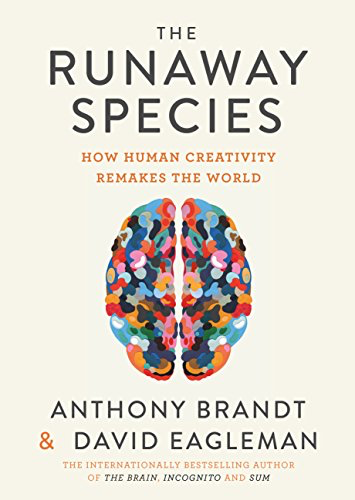
Where do innovation and creativity come from?
Creativity and innovation seems to be the flavour of the month. Watch this video with the key authors who wrote books on innovation, creativity and entrepreneurship: Matt Ridley, Steven Berlin Johnson, Jonah Lehrer and Peter Sims. They talk about why brainstorming doesn’t work, why it’s essential to cultivate eclectic connections and how to get the next great idea in a warm shower. All the books written by the speakers are highly recommended for anyone interested in creativity, innovation, success in business or is an entrepreneur:
Jonah Lehrer: Imagine: How Creativity Works
Matt Ridley: The Rational Optimist: How Prosperity Evolves
Steven Berlin Johnson: Where Good Ideas Come From: The Seven Patterns of Innovation
Peter Sims: Little Bets – How Breakthrough Ideas Emerge From Small Discoveries
Monday, April 9th, 2012
Book bags by Olympia Le-Tan – too small for iPads
You can’t judge a book by its cover. Olympia Le-Tan, French kooky accessory designer (who honed her craft at Chanel and Balmain before setting up her own label) puts a new spin on this saying. The book-bags are bounded with silk, hand embroidered with black satin and lined with Liberty print poplin and with £1000 tag (sold out at time of writing this blog). Michelle Williams, Natalia Vodianova, Natalie Portman, Clémence Poésy and Tilda Swinton are fans of Olympia Le-Tan. Unfortunately, the size of the book bags is just a bit too small (6″ x 8″ x2″) to carry iPad (7.31″ x 9.50″ x 0.37″) but otherwise perfect for the Kindle.
Tuesday, January 10th, 2012
31 Ways To Get Smarter In 2012 – according to Newsweek
New Year – new beginnings and apart of using speed reading to know more here are 31 tips collected by Newsweek and backed up by scientific research. Most of them you probably know by now but some might surprise you. Summary of all the top tips to get smarter in 2012 and here’s the link to further explanation if you need it.
1) Play Words With Friends
2) Eat Turmeric
3) Take Tae Kwon Do – or anything physical: dancing, tennis, etc
4) Get News from Al Jazeera – can make you more open-minded
5) Toss your smartphone – at least for a weekend
6) Sleep. A Lot. – especially when you’re learning a lot
7) Download the TED app – the best library of talks on almost everything
8. Go to a Literary Festival – research suggests that reading novels will make you smarter
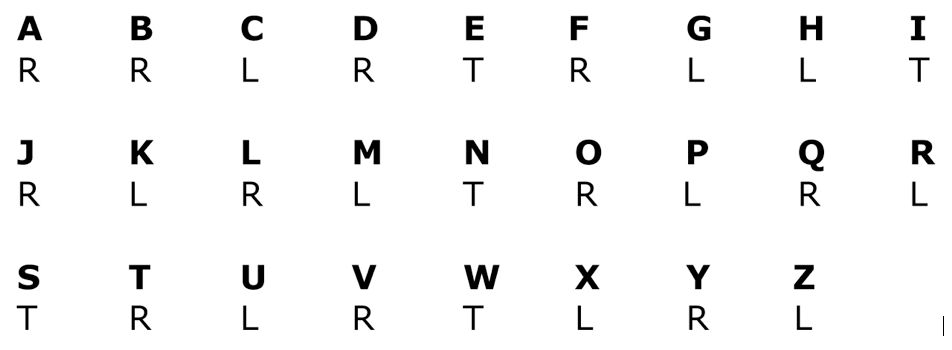
9) Build a ‘Memory Palace’
10) Learn a Language – Michel Thomas tapes are excellent start for beginner Spanish, German, Italian, French
11) Eat Dark chocolate – of course! yummy
12) Join a Knitting Circle – surprise here
13) Wipe the Smile Off Your Face – we suggest smiling to get into a good state (endorphin effect) but frowning apparently makes you more analytical and sceptical
14) Play Violent Video Games – not sure here, there must be better and more peaceful way – who sponsored this study
15) Follow these people on Twitter: Economic genius Nouriel Roubini (@Nouriel), online show host Jad Abumrad (@JadAbumrad) and author Colson Whitehead (@colsonwhitehead).
16) Eat Yogurt (probiotics)
17) Install SuperMemo (a flash card program)
18) See a Shakespeare Play – engages your brain more actively than most texts. Check the summaries of all Shakespeare plays
19) Refine Your Thinking
20) Hydrate – drink more H2O
21) Check out iTunes U
22) Visit your local Art Museum
23) Play a musical instrument – I wonder if Garage Band counts
24) Write by Hand – this one is very interesting since we type so much. Other studies suggest that by committing in writing to a goal/task we increase the chances of accomplishing that goal/task. The second best way is to tell somebody about your commitement.
25) The Pomodoro Technique – this mysteriously sounding technique is just a simple management technique of working in 25 minutes sessions (in speed reading we suggest 20 minute working sessions because basically you can and Parkinson’s law states that the task expands to the time available)
26) Zone Out
27) Drink Coffee – to boost short-time memory and keep depression at bay
28) Delay Gratification – key habit of successful people and builds executive functioning
29) Become an Expert
30) Write Reviews Online
31) Get Out of Town
We personally would add three more tips (3R – or three qualities if you like) that will ensure you become smarter this year and beyond:
1) Reflection – reflect on the day’s learnings (what you’ve learned which builds your knowledge and what you should unlearn to build your wisdom, according to Lao Tzu) – keeping a daily journal or diary will help with these – according to the tip 24 ideally written by hand
2) Relationship – everything from quantum bits to learning a new language to encounters on the street depends on the mastery of this
3) Resilience – one study suggests that the act of listing your many identities (father, mother, surfer, British, Buddhist, driver, speed reader, etc) will build your resilience.
Friday, December 2nd, 2011
Future of information processing and delivery – animated infographics (example: history of iPhone)
Printed books (as we know them) have dominated the transfer of information, knowledge and wisdom for over 600 years. Digital technologies allow for better presentation of information. Visual language was the original concept behind presenting information in less linear and wordy formats. Animated infographics are paving the way to quicker, more effective ways to present information. Here’s an example of the history of the development of iPhone in an animated infographic video. However ineractive apps are the real future of information delivery. One of my favourite apps is ZITE – where the app is actually learning what I like to read and finds the appropriate information, saving me lots of time.
Wednesday, November 9th, 2011
Spd Rdng (speed reading) technique: first and last – validated by new research
Spd Rdng (speed reading) technique 37: read beginnings and endings – validated by new research
We’ve pointed out from the brain’s point of view that an ideal way to read a book is to start with the first chapter (which tells you what it’s going to be about) and the last chapter (which tells you the conclusions). The only downside when it comes to novels might be that it spoils the ending for you. However, new research undertaken by Nicholas Christenfeld (Professor of social psychology at the University of California, San Diego) and Jonathan Leavitt (PhD candidate at UC San Diego studying psychology) shows that people typically enjoy a book more when they know the ending in advance – even when the story has an unexpected twist at the end. (Which explains why we’re happy to go to the the same film or to reread a book again and again.) So now there’s even more reason to use the technique with factual material – knowing the conclusion means that you know which information is important as you go along. If you don’t know the end then everything is of equal value. They always said that hindsight is 20/20! Read more about this speed reading technique.
Friday, August 26th, 2011
Soundtracks for books (with Booktracts) – Immersive reading vs speed reading
New idea for book reading: just add ambient and contextual soundtracks to books. Booktract – with it’s soundtracks for books is trying to enrich people’s experience with books by filling them with appropriate background sounds, sound effects, etc synchronised with your reading speed. Yes, sounds interesting so I’ve downloaded a free Booktrack soundtrack book/app – Sherlock Holmes. There are a few functions that speed readers might want but they’re actually counter intuitive. For example, there is a reading indicator which is there to help you pace yourself and you can adjust it but it is all too mechanical and works only at the regular limited speeds. And what’s worse is that if you choose the underline or ball indicator it jumps under or over each word respectively. There is a slider indicator on the right hand side that points only at the line but again the problem is the speed. As all speed readers know, in order to read fast and with comprehension, we need to read meaningful chunks of words, not individual words (speed reading principle number 6: read the message not the words – and principle number 11: focus on hot spots of information, in our Speed Reading Bible). This reading indicator can potentially harm your reading by instilling in you a bad habit for reading ie reading word by word (as opposed to speed reading principle number 8: take fewer steps per line). There is an on/off button. However, the soundtrack won’t be synchronised with the speed of reading. There is a speed reading test where you can check how fast you’re reading though and then use that to set the reading indicator speed. There is a slider to adjust the reading indicator which limits your reading speed to 700wpm (word per minute) which might be slow for some speed readers. But the major problem it that it is designed for novels and to read them for pleasure you need to read them at different speeds in whatever way pleases you.
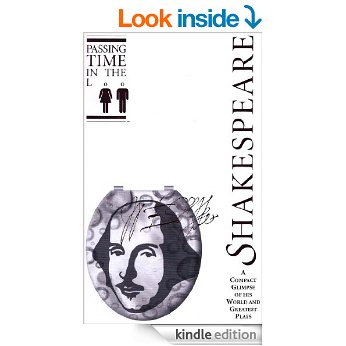
I’m sure people will try it a few times and time will tell if it will take off in a big way beyond the novelty factor (although they have big companies such as Sony and HarperCollins backing them). It might take some time to get used to the whole idea. Interactive books are the future though – for example Vooks. It should work for children’s books. I’ve looked at some kids books (for example on iPad: The Fantastic Flying Books ) and they’re amazing and very cheap. I wonder what kind of soundtrack they would add for summaries of books such as Passing Time in The Loo – Book Summaries.
Read more about Booktracks – soundtracks for books and immersive reading
Sunday, August 21st, 2011
How to read a book in one go
How to read a book in one go – featured in September 2011 issue of Wired.
Sunday, August 14th, 2011
Research Proves that Water (with fluoride) Lowers your IQ
30 studies that link fluoride to reduced IQ, impaired neurobehavioral development, and fetal brain damage have come from China where fluoride occurs at moderate to high levels in the drinking water in what is known as “endemic areas for fluorosis.” While there have been shortcomings in the methodologies of some of these studies, they have been remarkably consistent in their findings. Children exposed to excessive fluoride have been consistently observed to suffer from some form of neurological impairment.
• 24 studies have now reported an association between fluoride exposure and reduced IQ in children
• Three studies have reported an association between fluoride exposure and impaired neurobehavioral development
• Three studies have reported damage to the brain of aborted fetuses in high fluoride areas, and
• Over 100 laboratory studies have reported damage to the brain and/or cognitive function among fluoride-exposed animals. (Connett P, Beck J, Micklem HS. 2010. Appendix 1, Fluoride and the Brain in The Case Against Fluoride. How Hazardous Waste Ended Up in Our Drinking Water and the Bad Science and Powerful Politics That Keep It There. Chelsea Green Publishing, VT. 2010.)
The solution: install a whole house water filter that filters fluoride. Recommended filter (mention my name Jan Cisek and you’ll get 10% off the filter) and switch to non-fluoride tooth pastes. Further reading and all the research
Friday, August 12th, 2011
London Riots, Books and the Psychology of Looting
While psychologists try to explain the UK riots, as an Environmental
Psychology student I was particularly interested in what kind of shops the
looters were robbing. What choices were they making as consumers?
Not good ones, apparently. To quote one reporter, they are a mob and a mob
with bad taste – since the shops they concentrated on looting were Primemark
and poundstores.
Not only that, but in Clapham Junction, London, where almost all the shops
in the high street were looted, one was left untouched by rioters -
Waterstones bookshop (according to Zoe Williams in The Guardian). Are these
looters unable to read?
Some have said that a large number of youngsters were involved in these
riots because it was the school holidays, the nights are longer, and they
were doing it for the buzz. Is the implication that if they had only been
able to get hold of a gripping book, they might have kept out of trouble?
To give the looters the benefit of the doubt, maybe they are digital readers
with free Kindle apps downloaded to their BlackBerries (did they remember to
nick Blackberries and iPads?). Or maybe at this very moment they are reading
ebooks such as Frickonomics, or Malcolm Gladwell’s latest or bestselling
summaries such as Passing Time in the Loo or even our own Spd Rdng – the
Speed Reading Bible.
Hmm. I somehow doubt that. But at least they were not into burning books.
Thankfully.